
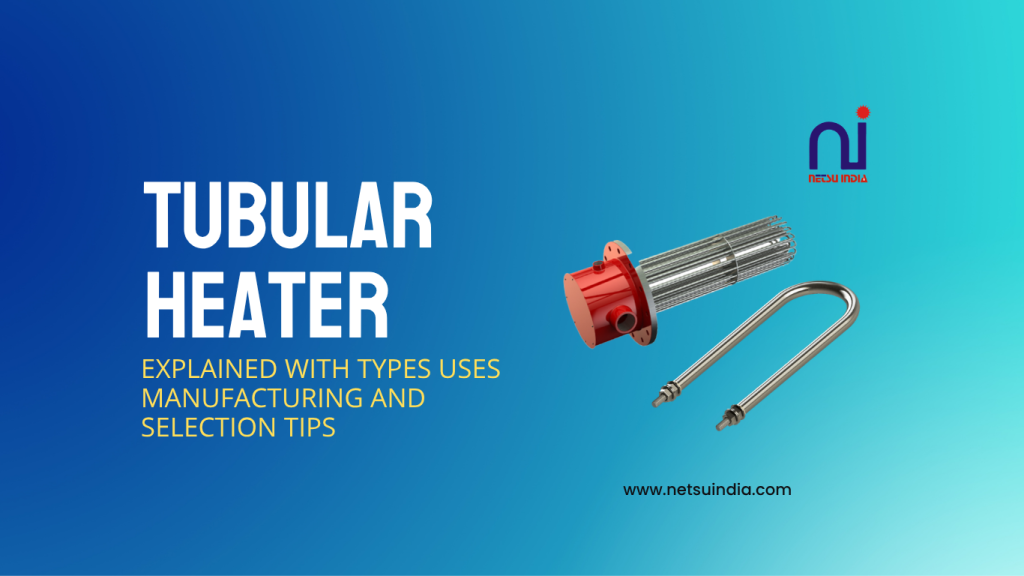
Tubular heaters are one of the most reliable and widely used heating solutions in both industrial and domestic applications. Whether you need to heat water, air, oil, or chemicals, a tubular heater offers consistent performance, durability, and flexibility. In this detailed and easy-to-understand guide, we will cover everything – including types, working, tubular heater construction, tubular heater manufacturing process, applications, and expert buying tips.
What is a Tubular Heater?
A tubular heater is an electric heating element designed in the shape of a metal tube. Inside this tube, a resistance wire generates heat when current flows through it. The outer surface of the tube then transfers this heat to the surrounding environment such as air, water, or liquids.
These heaters are used in a wide range of industries because of their strong build quality and ability to work efficiently in different conditions. Unlike other heating devices, tubular heaters are highly adaptable and can be customized in terms of size, shape, and power rating.
They are commonly used in:
- Industrial machinery
- Water heating systems
- Air heating units
- Chemical processing plants
Because of their versatility, many businesses prefer working with experienced tubular heater manufacturers to get customized solutions.
How Does a Tubular Electric Heater Work?
A tubular electric heater works on the principle of electrical resistance heating. When electricity passes through the internal resistance wire (usually made of nichrome), it produces heat due to resistance.
Here’s a more detailed explanation:
- Electric Current Flow
When the heater is switched on, electric current flows through the resistance wire. - Heat Generation
The resistance in the wire converts electrical energy into heat energy. - Heat Transfer
This heat is transferred to the outer metal tube through magnesium oxide powder, which acts as an insulator and heat conductor. - Heat Distribution
Finally, the outer surface distributes heat evenly to the surrounding medium (air, liquid, or surface).
This process ensures fast heating, uniform temperature distribution, and energy efficiency, making tubular heaters ideal for both small and large-scale applications.
Types of Tubular Heaters
There are different types of tubular heaters designed for specific uses. Choosing the right type depends on your application and environment.
1. Flexible Tubular Heaters
Flexible tubular heaters are designed to be bent into different shapes without damaging the internal components. This makes them highly suitable for customized installations. These heaters are commonly used in:
- Packaging machines
- Textile machinery
- Plastic molding equipment
- Complex industrial systems
Their flexibility allows engineers to design heating systems according to space constraints. They are also easy to install and replace, making them a preferred choice for many industries.
2. Single Pass Tubular Heater
A single pass tubular heater has a straight design where the heating element runs in one continuous path. It is simple, cost-effective, and easy to install. These heaters are suitable for:
- Basic heating requirements
- Air ducts
- Small industrial systems
- Simple heating chambers
Due to their straightforward design, they are often used where complex heating arrangements are not required.
3. Tubular Air Heater
A tubular air heater is specially designed to heat air in various systems. These heaters are installed inside ducts or air handling units to provide controlled heating. Applications include:
- HVAC systems
- Industrial dryers
- Ventilation systems
- Air curtains
They provide uniform air heating and are energy efficient, making them ideal for commercial and industrial use.
4. Tubular Water Heater
A tubular water heater is widely used for heating water in both residential and industrial setups. These heaters are commonly found in geysers and water tanks.
Key applications:
- Domestic water heating
- Industrial boilers
- Storage tanks
- Hotels and hospitals
5. Tubular Immersion Heater
A tubular immersion heater is directly immersed in liquids to provide fast and efficient heating. These heaters are designed to handle high temperatures and harsh environments.
Common uses:
- Oil heating
- Chemical processing
- Water treatment plants
- Industrial tanks
6. Industrial Tubular Heater
An industrial tubular heater is built for heavy-duty operations. These heaters are designed to withstand high temperatures, pressure, and continuous usage.
They are used in:
- Manufacturing industries
- Food processing plants
- Petrochemical industries
- Heavy machinery
7. Tubular Solar Water Heater
A tubular solar water heater uses solar energy to heat water. It is an eco-friendly option that reduces electricity consumption.
Applications:
- Residential homes
- Hotels
- Hospitals
- Commercial buildings
Also read – Choosing the Right Industrial Heater for Reliable Performance
Tubular Heater Construction
Understanding tubular heater construction helps in knowing why these heaters are so efficient and durable.
Main Components Explained:
- Outer Metal Tube
Made from stainless steel, copper, or Incoloy, this tube protects the internal components and transfers heat effectively. - Heating Element (Resistance Wire)
Usually made of nichrome, this wire generates heat when electricity flows through it. - Magnesium Oxide Insulation
This powder fills the space between the wire and tube, providing electrical insulation and improving heat transfer. - Terminal Ends
These are used to connect the heater to the power supply. - Sealing Material
Prevents moisture entry and protects internal parts.
This strong construction ensures:
- High efficiency
- Electrical safety
- Resistance to corrosion
- Long operational life
Tubular Heater Manufacturing Process
The tubular heater manufacturing process is a precise and controlled procedure followed by professional tubular heater manufacturers.
Step-by-Step Process:
- Wire Selection & Placement
High-quality resistance wire is selected and placed inside the tube. - Insulation Filling
Magnesium oxide powder is compacted inside the tube to ensure proper insulation. - Tube Reduction
The tube is compressed to increase density and improve heat transfer. - Bending & Shaping
The heater is shaped as per design requirements using special tools. - Terminal Attachment
Electrical terminals are attached for power connection. - Sealing Process
Ends are sealed to prevent moisture and contamination. - Testing & Quality Check
Each heater is tested for:- Electrical safety
- Heat output
- Durability
Applications of Tubular Heaters
Tubular heaters are widely used across different industries due to their flexibility and reliable performance. Here are all applications combined in one list:
- Used in plastic and rubber processing machines for consistent heating
- Suitable for chemical heating applications in industrial processing units
- Ideal for oil and fuel heating systems in various industries
- Commonly used in food processing equipment for controlled temperature heating
- Installed in HVAC and air duct systems for efficient air heating
- Used in laundry and drying machines for quick and uniform heat
- Applied in water heating units, tanks, and storage systems
- Widely used in geysers for domestic hot water requirements
- Used in kitchen appliances for cooking and heating purposes
- Suitable for solar water heating systems for energy efficient solutions
Benefits of Using Tubular Heaters
Tubular heaters are widely preferred because they offer reliable performance, flexibility, and long-term value across different applications. Below are the key benefits explained in detail:
1. High Efficiency
Tubular heaters provide fast and uniform heating, ensuring consistent temperature distribution. Their design minimizes heat loss and improves energy usage, helping reduce electricity consumption while maintaining effective performance in both industrial and domestic applications.
2. Durable Design
Made from strong materials like stainless steel or copper, tubular heaters are built to last. They can handle high temperatures, moisture, and tough environments, making them suitable for long-term use with minimal wear and maintenance issues.
3. Versatility
These heaters can be used for heating air, water, oil, and chemicals across different industries. Available in various shapes and sizes, they easily fit into multiple systems, making them a flexible solution for both standard and customized heating requirements.
4. Easy Installation
Tubular heaters have a simple and compact design, allowing quick installation in machines, tanks, or ducts. They are easy to replace and maintain, reducing downtime and making them convenient for both industrial setups and household applications.
5. Cost-Effective
Tubular heaters are affordable and require low maintenance over time. Their energy efficiency helps reduce electricity costs, while their long lifespan minimizes replacement expenses, making them a practical and economical choice for various heating needs.
Conclusion
A tubular heater is a powerful, flexible, and efficient heating solution used across various industries and homes. From flexible tubular heaters to tubular immersion heaters, each type is designed for specific needs. Understanding the tubular heater construction and tubular heater manufacturing process helps in making informed decisions.
Choosing the right tubular heater supplier and maintaining the heater properly ensures long-lasting performance and maximum efficiency.